
We’re Not Selling TVs: How We’re Undervaluing WordPress Software
I’ve been running my business for a little over five years now. Long enough to notice that something about WordPress plugin pricing is fundamentally upside down.
Most of us aren’t marketers. We’re developers who built something useful and then copied the pricing models we saw around us in the WordPress ecosystem, assuming the big players must have figured it out.
I did exactly that. And over the years, I learned — often the hard way — that a lot of those “best practices” quietly work against us.
This post isn’t about growth hacks, funnels, or squeezing every last cent out of customers. It’s about value — and how, by blindly following common pricing trends, we often end up working against our own interests.
Table of contents
Why Black Friday Discounts Don’t Make Sense for WordPress Plugin Pricing
Imagine buying a TV with a yearly subscription.
Every month, a technician comes to your house. They replace the Wi-Fi module with a newer one. A year later, they swap the panel and suddenly your TV supports 8K. Performance improves. Bugs get fixed. Compatibility with new devices is handled for you.
And you keep paying the same yearly price.
That sounds ridiculous — because that’s not how hardware works.
Hardware depreciates. Technology moves on. The TV you bought last year is worth less today than it was back then.
If you do your job right, software works in the exact opposite way.
Software increases in value over time. You add features, fix bugs, ship security updates, improve performance, and keep up with WordPress core, PHP versions, and modern standards. Customers aren’t paying for a static product — like a TV — they’re paying for something that keeps evolving.
And once you truly internalize that, Black Friday discounts start to feel fundamentally wrong.
Why would you sell something that is better today than it was last year at a massive discount on one arbitrary day in November?
Now, to be clear: the problem isn’t discounts per se. A modest, always-available introductory discount can make sense. It lowers the barrier to entry without turning your product into a bargain moment. I do this myself.
The problem starts when those discounts increase, and becomes even bigger when it’s time-based, and tied to hype.
The Introductory Discount Paradox in Pricing WordPress Plugins
High introductory discounts come with a hidden risk: if renewing costs significantly more than re-buying, customers will simply re-buy. Not because they don’t value your product, but because your pricing model tells them it’s the rational thing to do. When buying a new license every year is cheaper than renewing, loyalty gets punished and optimization for bargains gets rewarded.
I know plenty of developers (myself included) who do exactly this with certain products. Not because we dislike the software, but because the price jump between the discounted first year and the full renewal feels unjustifiable. Over time, that teaches a very clear lesson: the product might be useful, but it’s not worth the full price.
Black Friday discounts amplify this effect.
They add artificial urgency. They reinforce the idea that waiting is rewarded. And they train customers to associate your software — something that improves over time — with a short-term grab-bag moment instead of long-term value.
There is one notable exception.
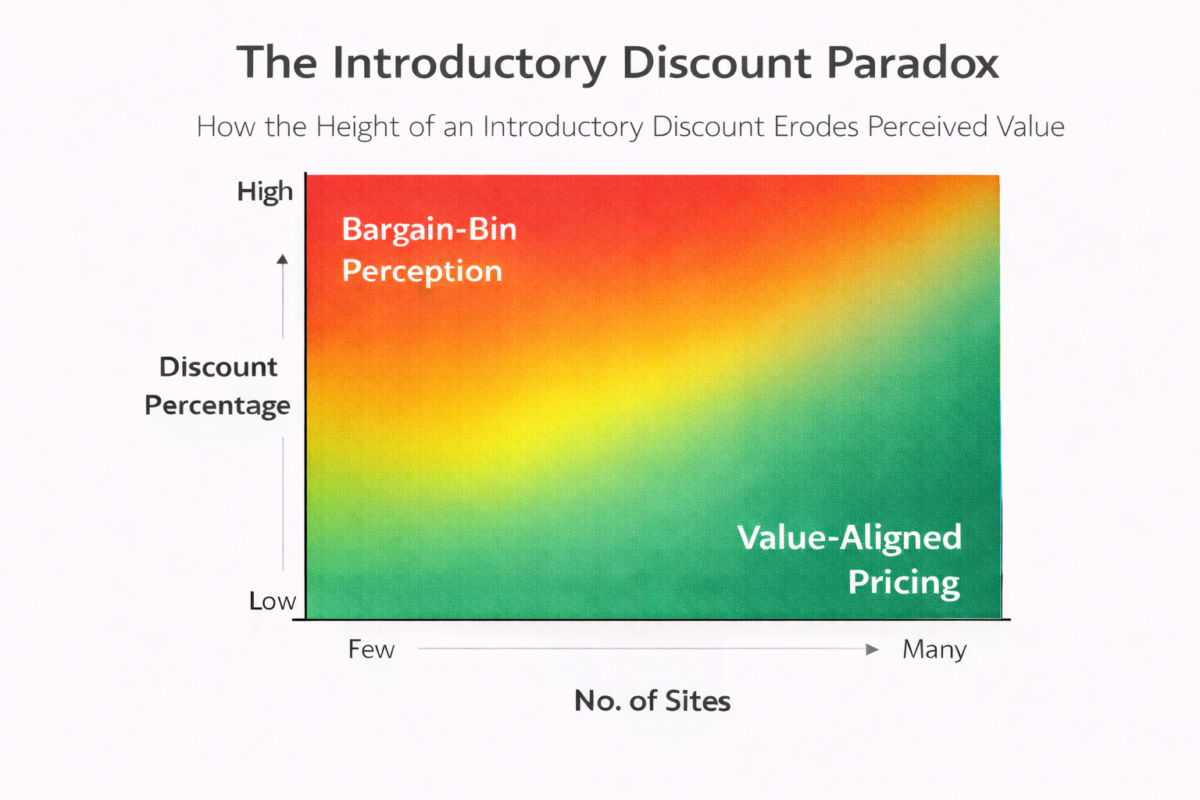
High discounts can make sense for licenses with many site activation slots — typically agency plans. In those cases, re-buying isn’t trivial. Replacing a license key across dozens or hundreds of sites is real work, and the savings rarely justify the hassle. That’s when full-price renewals start to make sense again, and pricing aligns with how agencies actually think: in terms of ROI and continuity, not bargains.
But for single-site or small multi-site licenses, Black Friday discounts do the opposite of what you want. They don’t just lower your price — they undermine the perceived value of software that, by its very nature, becomes more valuable over time.
And once customers learn that lesson, it’s very hard to unteach it.
Black Friday Discounts and Lifetime Licenses: A Match Made in Hell
Last Black Friday I bought 3 (!) lifetime licenses for less than €100 from a single developer. That developer will never see me again, but he will be supporting me and shipping updates for 3 (!) plugins indefinitely, for the price of a few days of groceries.
Once you start looking at software as something that increases in value over time, discounting lifetime licenses immediately starts to feel wrong — yet it’s an extremely common practice.
Let’s bring back the TV analogy for a moment.
Imagine buying a TV for a fixed, one-time price — like you do today — but that technician we talked about earlier still shows up every month. New hardware. Better performance. New capabilities. And you never have to buy another TV again.
That sounds like an absurdly good deal, doesn’t it?
Now ask yourself: would this be a sustainable business model?
Because that’s exactly what a lifetime software license represents.
A lifetime license means someone pays once for a product that keeps improving indefinitely. No renewals. No follow-up payments. Just ongoing value, forever.
And that’s why offering additional discounts on lifetime licenses — whether or not on Black Friday — is completely backwards.
You’re discounting something that is, by definition, already heavily discounted relative to the value it delivers. You’re effectively telling customers that even this “pay once, benefit forever” deal still isn’t cheap enough.
Short-term revenue spikes are tempting — I get it. But think about the message you’re sending.
Lifetime Licenses and Sustainable WordPress Plugin Pricing
Once you accept that a lifetime license is already an extremely generous deal, the next question becomes obvious: who — or rather, what type of customer — actually deserves such a deal?
When I started out five years ago, my license structure looked like this:
- 1 site license
- 5 sites license
- 100 sites license
- Unlimited sites license
I didn’t really think about it. I just copied this from the big players in WordPress-land because I figured they knew what they were doing.
I didn’t offer lifetime licenses back then, but I did offer an unlimited site license.
That unlimited license was quickly abused by pirates who started reselling my plugin for anywhere between €3 and €7 per copy. As soon as I found out, I removed it from my offering.
A few months later, an agency owner reached out to me and asked if I offered an unlimited, lifetime license. He wasn’t just asking for a deal, he was kind enough to explain the reasoning behind his request.
Agencies manage dozens, sometimes hundreds of websites. They often resell plugins as part of a broader service. Tracking renewals, invoices, and expiring licenses across large client portfolios is friction they simply don’t want. For them, paying more upfront in exchange for long-term convenience is a perfectly rational trade-off.
That conversation completely changed how I think about lifetime licenses.
The Core Benefit of Lifetime Licenses
A lifetime license offers one core benefit: never having to renew.
Is there any meaningful added convenience in offering a lifetime alternative on 1-, 5-, or 10-site plans?
These customers aren’t agencies. They’re bloggers, freelancers, or small businesses — and renewing annually really isn’t (or shouldn’t be) a hassle for them.
From a business perspective, these plans also don’t generate enough revenue to justify a lifetime model.
Lifetime licenses should never be your core business. In the context of WordPress plugin pricing, they should be treated as exceptions — not as the default.
So why offer them as an alternative for all your plans? They’re cashflow injections, not a foundation. At best, they should be a service for the few customers where they genuinely make sense — and that service should be priced accordingly.
That’s where agencies come in.
What feels “expensive” to you as a solo developer is often peanuts to an agency. Agencies don’t look at the sticker price, they look at ROI. If they can earn back the cost after one or two client projects, the price is effectively irrelevant.
Whatever multiplier you think is fair for your Agency Lifetime license, go higher. I started out with 2.5 times and they sold. Then I tried 3 times, and sales didn’t drop. After I raised my prices again, no noticeable drop.
Be restrictive with your lifetime offerings. Your primary business model should always be yearly subscriptions. Predictable, recurring revenue.
Renewal Discounts: A Well-Intended Mistake
Once yearly subscriptions are your primary business model, the next point of discussion inevitably becomes renewal discounts.
I understand the instinct. Reward loyal customers. Make them feel appreciated. Keep them around.
But renewal discounts don’t actually do what people think they do. They once again shift the focus away from actual product value and toward price.
You’re not selling a TV — and you shouldn’t be pricing your software like one.
Software that is actively maintained isn’t static. Customers are paying for something that increases in value.
In that sense, renewing at full price is the fair deal.
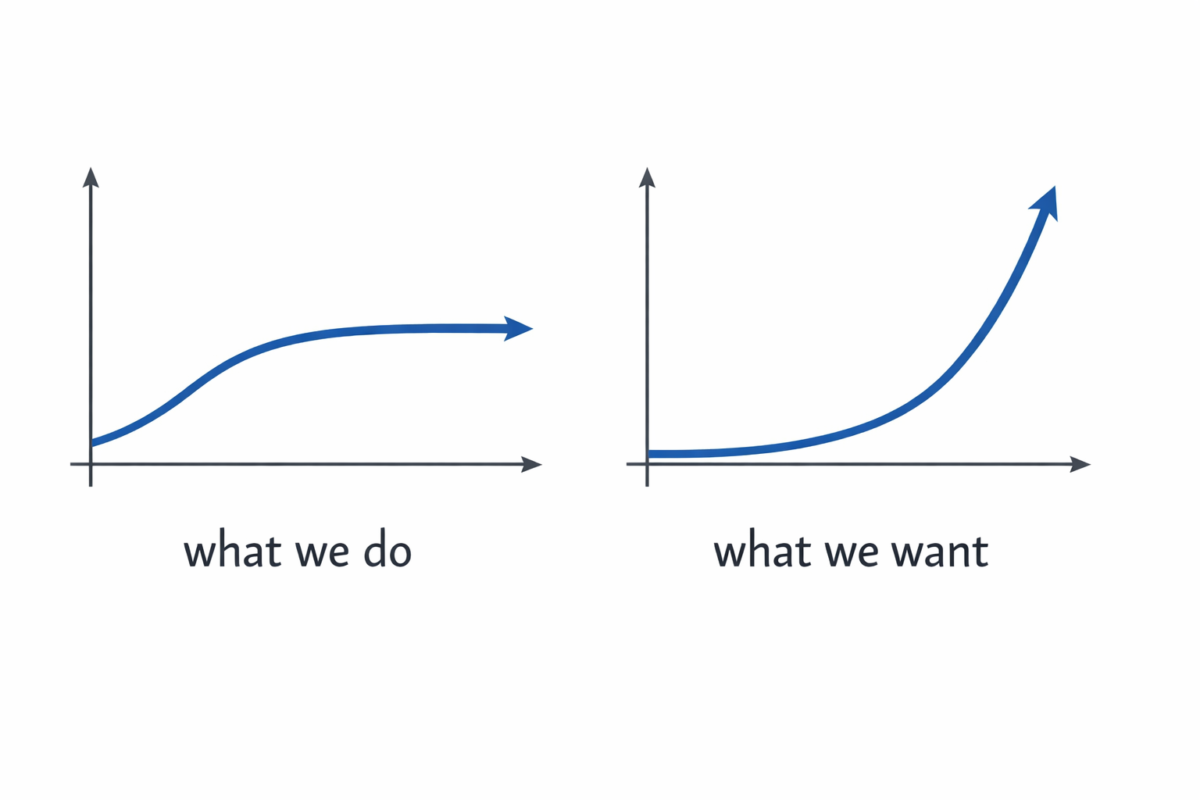
When you introduce renewal discounts, you quietly flatten your growth curve. Existing customers become less valuable than new ones. Over time, your average revenue per user goes down — even though your product keeps getting better.
That’s a problem.
A Strange Incentive
It also creates a strange incentive.
Customers learn that loyalty is rewarded with lower prices, while new customers end up subsidizing the business. Growth starts to depend disproportionately on acquisition, instead of retention doing the heavy lifting.
Instead of renewal discounts, I offer a modest introductory discount for new customers — roughly 20%, rounded to a clean number. Lifetime licenses excluded, obviously. Existing customers renew at the regular price.
This keeps pricing simple and predictable. It also aligns incentives correctly and helps shift the reward away from money and toward value: the longer someone stays, the more value they get — not the less they pay.
If you feel the urge to offer renewal discounts, ask yourself what problem you’re actually trying to solve:
- If it’s churn, better software, better UX, and better support will do more than any percentage ever could.
- If it’s appreciation, show it by adding value — not by lowering your price.
Because once you start discounting renewals, it becomes very hard to stop — and even harder to grow.
Trust is the Reward
By this point, it might sound like I’m arguing against everything we usually do to reward customers:
- No Black Friday discounts.
- No lifetime deals for everyone.
- No renewal discounts.
So the obvious question becomes: how do you actually reward your loyal customers then?
Well, the good news is: you already are — you’re probably just calling it “work”.
Every bug fix you ship, every feature you add, and every improvement you make to performance, security, or compatibility builds trust. Customers with an active subscription aren’t paying full price out of obligation — they’re paying for progress, and for the confidence that the software they rely on is actively maintained.
That trust is reinforced by protecting active subscriptions from price increases and by offering fast, honest, human support.
That combination creates goodwill — and no discount can buy that.
Rounding Up
We’re not selling TVs.
We’re selling software that gets better over time.
And yet, as an ecosystem, we keep pricing it like hardware: discounting it, devaluing it, and training customers to wait for the next sale.
If we want customers to value our products, we have to start acting like they’re valuable — and that starts with more intentional, value-driven WordPress plugin pricing.
That means:
- Fewer discounts
- Less Black Friday nonsense.
- No renewal discounts.
And more focus on:
- Quality software
- Fair, predictable pricing
- And honest, human support
Do that consistently, and you won’t need to “reward” customers with discounts.
They’ll stick around — not because it’s cheaper, but because it’s worth it.


Fair points, but I think I can add something
1. Big players can afford to offer lifetime licenses. They have dedicated teams that can continuously provide support.
2. Not all plugins are created equal. Some require constant updates for support, features, WP compatibility fixes. In those cases renewals make sense.
But some plugin types just work. These “install and forget”, no need for updates. These authors have a real problem making user renew.
So, you should definitely not blindly copy other pricing models. Do not offer lifetime licenses just to generate initial cash inflow. Offer renewal discounts if your plugin is “use and forget about it”
Thanks for stopping by!
I don’t think any plugin is “install and forget”. There’s a new PHP version coming out each year, and WP is updated 4 times (?) a year. Compatibility is always work, and work should be compensated.
But, I do get your point. I have a couple of Set and Forget plugins, which I published for free. These are just to make a name for myself, which is also added value and, in a way, compensation for work. However, if the amount of work doesn’t justify publishing the plugin for free, developers should think about how they can visualize/communicate the value added by their plugin. It’s not for nothing that Comment Spam plugins display notifications of how much spam comments they blocked. For the same reason, my plugin OMGF displays a stoplight in the admin bar. So, people are made aware at all times, that their Google Fonts are optimized or, if something’s wrong, see that OMGF is always working in the background.